

You pick up your vehicle from the dealership after its first warranty repair and breathe a sigh of relief. Problem solved, right?
Well, hopefully.
Some words of wisdom: don’t put the cart before the proverbial (possibly defunct) horse.
If you’ve spent any time researching California Lemon Law, you already know that some vehicle defects have a frustrating habit of returning. A warning light comes back on. The transmission starts slipping again. And again. The same mysterious vibration returns a week later.
The good news? Your very first repair visit can play a critical role in protecting your rights if the problem persists.
Here’s a practical, step-by-step Lemon Law checklist spotlighting what to do immediately after your first repair – and how to put yourself in the strongest possible position should a future Lemon Law claim become necessary.
Step 1: Save Every Slip of Paper (Yes – Every Slip)
This may be the most important step on the entire checklist.
Before leaving the dealership, make sure you receive:
- Repair orders
- Service invoices
- Diagnostic reports
- Warranty repair documentation
- Any written communication regarding the repair
Many consumers assume the dealership will always have these records available at a later date. Don’t take the chance. While service departments typically retain records, having your own complete file can save considerable time and frustration.
California Lemon Law claims often depend heavily on documented repair history.
Step 2: Review the Repair Order Carefully
Don’t simply toss the paperwork into your glove box.
Read it.
Specifically, confirm that the repair order accurately reflects:
- Your complaint
- The symptoms you described
- The dealership’s diagnosis
- The repairs performed
- The date and mileage
For example, if you reported: “Vehicle stalls while accelerating.”
You do not want the repair order to simply say:
“Customer states vehicle concern.”
The more specific the documentation, the better.
Step 3: Test the Vehicle Immediately
Once you receive the vehicle back, pay close attention to how it performs.
Ask yourself:
- Has the original problem actually been fixed?
- Are warning lights still appearing?
- Are unusual sounds, vibrations, or drivability issues still present?
- Did the dealership verify the repair before returning the vehicle?
Sometimes defects return within hours or days of the first repair attempt.
If the issue continues – you got it: document it.
Step 4: Start a Vehicle Defect Log
Many drivers rely on memory.
That’s a mistake.
Create a simple log that tracks:
- Dates
- Mileage
- Symptoms
- Warning lights
- Driving conditions
- Conversations with the dealership
For example:
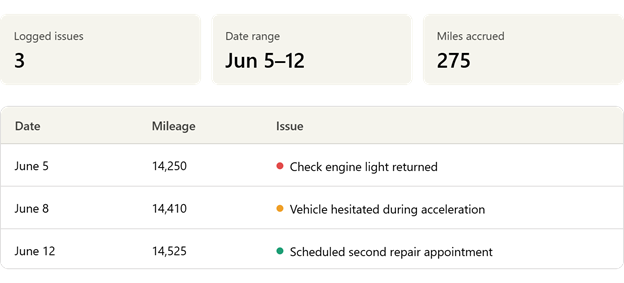
A consistent timeline can become valuable evidence later.
Step 5: Continue Using Authorized Repair Facilities
California Lemon Law generally revolves around giving the manufacturer a reasonable opportunity to repair the defect.
That means repairs should typically be performed through:
- Authorized dealerships
- Manufacturer-approved service centers
If the problem returns, continue reporting it through the proper channels.
A manufacturer cannot be expected to correct a defect if it was never given the opportunity to do so.
Step 6: Avoid Unauthorized Modifications
This is where some otherwise strong claims run into trouble.
If you’re experiencing a recurring defect:
- Avoid aftermarket performance modifications.
- Avoid unauthorized software tuning.
- Avoid modifications that could affect the affected system.
Manufacturers often look for reasons to argue that a problem was caused by something other than a warranty-covered defect.
Keeping the vehicle as close to factory condition as possible helps eliminate those arguments.
Step 7: Pay Attention to Time in the Shop
Many consumers focus only on repair attempts.
But California Lemon Law also considers how long the vehicle is unavailable.
Generally speaking, a vehicle may qualify if:
- The same defect has been subject to multiple repair attempts; or
- The vehicle has been out of service for an unreasonable amount of time.
A commonly referenced benchmark is 30 cumulative days in the repair facility during the warranty period.
That’s why tracking repair dates is so important.
Step 8: Know When the Pattern Starts Emerging
One repair visit rarely creates a Lemon Law claim.
A pattern does.
Pay attention if:
- The same issue returns repeatedly.
- Multiple repair attempts fail.
- New repairs address the same underlying concern.
- The dealership cannot identify the cause.
- The vehicle spends significant time out of service.
These are often the early warning signs that a vehicle may be heading toward Lemon Law territory.
Step 9: Don’t Wait Too Long to Seek Guidance
Many consumers wait until the fourth repair attempt before speaking with an attorney.
Sometimes that can work.
Sometimes valuable documentation opportunities are lost along the way.
Consulting a California Lemon Law attorney early can help you:
- Organize records properly.
- Preserve important evidence.
- Understand whether your vehicle appears to be qualifying.
- Avoid common mistakes that could complicate a claim later.
Remember: speaking with The Lemon Lawyer costs nothing.
Why Documentation Matters So Much
California Lemon Law cases are often won through documentation.
The strongest claims usually include:
- Repair orders
- Warranty records
- Service invoices
- Correspondence with dealerships
- Vehicle defect logs
The better your records, the easier it becomes to demonstrate that:
- The defect occurred under warranty.
- The manufacturer had opportunities to repair it.
- The issue affects the vehicle’s use, value, or safety.
Why Choose The Lemon Lawyer?
If your vehicle continues experiencing the same defect after repair attempts, The Lemon Lawyer can help determine whether you qualify for relief under California Lemon Law.
Consumers choose The Lemon Lawyer because of:
- More than 25 years of California Lemon Law experience
- Over 3,000 successful cases statewide
- Direct attorney access
- No upfront legal fees
- Buyback, replacement, and compensation options
- Friendly, efficient service
Most importantly, California Lemon Law generally requires manufacturers to pay attorney’s fees when consumers prevail, meaning there is no cost to speak with the team about your claim.
The Bottom Line
Your first repair visit may not seem like a big deal at the time. But if the problem comes back, the records and documentation you create today could become the foundation of a successful California Lemon Law claim tomorrow.
Stay organized, keep detailed records, and pay close attention to recurring problems. If the defect persists, The Lemon Lawyer can help you understand your rights and determine the best path forward. Reach out to our team today to learn more.
***
TL;DR
Your step-by-step Lemon Law checklist:
After your first warranty repair:
- Keep all repair orders and service records.
- Review the repair paperwork before leaving the dealership.
- Monitor whether the problem returns.
- Document symptoms, dates, and mileage.
- Continue bringing the vehicle to an authorized dealership if issues persist.
- Avoid unauthorized modifications.
- Contact a California Lemon Law attorney if the defect continues despite multiple repair attempts.
Good documentation from day one can make a significant difference if your vehicle ultimately qualifies under California Lemon Law.
***
FAQ
Does one repair attempt qualify my vehicle as a lemon?
Usually not. California Lemon Law generally requires multiple repair attempts or a substantial amount of time out of service before a vehicle qualifies.
What documents should I keep after a repair?
Keep all repair orders, invoices, warranty records, and communications related to the repair.
What if the problem comes back after the first repair?
Schedule another warranty repair visit as soon as possible and continue documenting the issue.
Can I repair the vehicle somewhere else?
For potential Lemon Law claims, repairs should generally be performed through authorized dealerships or manufacturer-approved repair facilities.
When should I contact a Lemon Law attorney?
If the defect continues after repair attempts — or if you’re unsure whether your vehicle may qualify — it’s wise to seek guidance as early as possible.